Building SaltHub: Importance of Usability Testing for a Better User Experience
2023-04-29
This is a continuation blog post from SaltHub. For this part 2, I'll be sharing how I get started with SaltHub.
From the very start, I look through all the documentations that I was given access to from my Team Manager. I then analyse and understand from both product point of view and our code base from Frontend side.
Next, before jumping in to start coding, as a UX/UI Designer with 7 years of working experience, I know the importance of usability testing for a better user experience. I lead my Frontend Team to gather some feedbacks from the Users. I then lead my Frontend Team on how to use Figma and I'm happy to add that none of my Frontend Team were left behind. I encouraged and guided all of my Frontend Team to try and mock up designs using Figma. I ensure that all design screens and prototype are ready for the Usability Testing. On top of that, I also created a design system which included colour and typography and set up the design components.
Now this is the most crucial part, I lead my Frontend Team to conduct the Usability Testing. The aim here is to identify if the new designs actually solve and help our Users. Below, I explained more about Usability Testing.
What is Usability Testing?
Usability testing is a method used to evaluate how easy it is to use a product or system, such as a website, app, or software program, by testing it with real users. The purpose of usability testing is to identify any usability issues or problems that users may encounter while interacting with the product or system, and to gather feedback that can be used to improve its design and functionality.
During usability testing, a group of users is recruited to perform a series of tasks while using the product or system, while their interactions and feedback are observed and recorded by the testers. The testers may also collect quantitative data such as task completion time and error rates, as well as qualitative data such as user comments and feedback.
The results of usability testing can be used to make improvements to the design and functionality of the product or system, which can lead to a better user experience and increased user satisfaction. It can also help identify potential barriers to adoption, such as confusing navigation or slow load times, and address them before the product is launched.
The result from our Usability Testing:
- We now have the main features needed for our Users.
- We now have a well documented Design System that helped us when we implement the styling.
- Our Users are excited and they look forward for the latest version of this product.
- The designs are no longer just a hypothesis because after testing it on our Users, we know that it did help our Users due to the results and feedback from our Usability Testing.
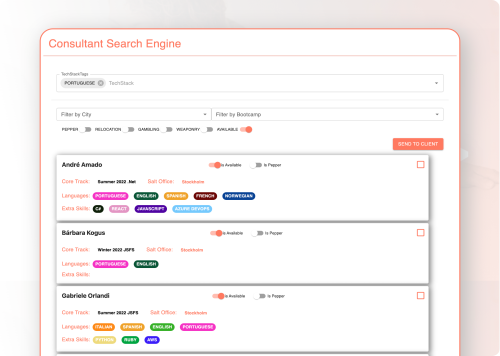
The Original SaltHub Interface:
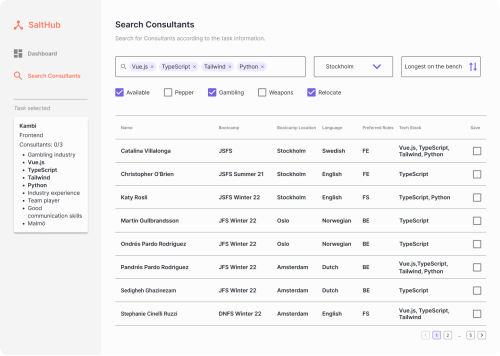
After Design Testing, SaltHub Interface:
Why testing the design is important?
Testing the prototype design with real users is crucial for ensuring that the final product or system will meet the needs and expectations of its intended users. By gathering feedback and insights from users, designers can identify and address usability issues, design flaws, and other potential problems that may not be apparent during the development process.
Usability testing also provides valuable information about user behavior and preferences, which can be used to refine and optimize the design of the product or system. This can result in a more intuitive, user-friendly, and engaging user experience, leading to greater user satisfaction and adoption.
In addition, testing the prototype design with users early on in the development process can help save time and resources by identifying and addressing issues before they become more difficult and expensive to fix. By incorporating user feedback into the design process, designers can create a product or system that is more effective, efficient, and enjoyable to use.
Conclusion:
Overall, testing the prototype design with real users is a critical step in the development process, helping to ensure that the final product or system meets the needs and expectations of its intended audience and is optimised for usability, engagement, and user satisfaction. If you would like to view my past previous Design works from my 7 years as a UX/UI Designer, you can view it here (https://www.behance.net/KatyLii).
Also on codewithkatyrosli.com
Building SaltHub: My Experience Converting a JavaScript Codebase to TypeScript, 2023-05-04
This is a continuation blog post from SaltHub. For this part 3, I'll be sharing how I get started with the implementation phase.
Below are the steps that I took to understand the codebase that was already written by previous Frontend Team:
- Identify the purpose and scope of the codebase: I lead my Frontend Team by reviewing the project documentation, talking to our Team Manager, and examine our User requirements.